

Creating Your Own AI Cutting
Via our machine learning model, AI is enabled on your machine, adjusting to optimized parameters at all times.
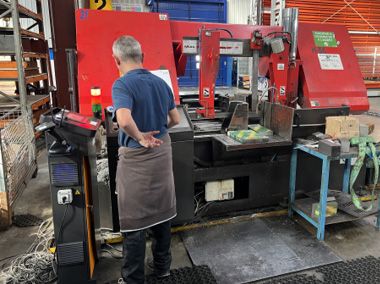
Cosen’s AI CUTTING is enabled by the use of intelligent vibration sensors, which collect cutting parameters and vibration specific to the machine. A unique AI model is thus established, and each machine has its own exclusive DIGITAL TWIN. AI Cutting effectively predicts and makes recommendations on how to optimize parameters, i.e. parameters to extend tool life and prevent mistakes when cutting.
Cutting is a continuous and dynamic process, during which, our vibration sensors continue to collect vibration signals, diagnose and intelligently retrain on a real-time basis. This is how AI Cutting’s parameter recommendations can be specific and unique to your machine, compared to using a general cutting parameter chart for references.
AI Cutting makes your machine learn and cut smarter.
Machine-Specific AI Cutting Model
Cosen can use data from compatible sensors to build an analytical model that reflects the condition of a specific machine, blade, and material combination. The model can support parameter recommendations, abnormal-trend detection, and—where controls permit—further adjustment.
Problems Solved on the Shop Floor
Traditional machining has long treated equipment as a "passive, reactive tool." This rigid operational approach exposes small-to-medium workshops to severe hidden waste:
- Outdated, Rigid Generic Parameter Charts: Traditional shops rely heavily on factory-issued, one-size-fits-all parameter sheets. This ignores machine age, spindle wear, and real-time physical conditions, preventing your machine from operating at its true peak capacity.
- Unpredictable Blade Degradation & High Consumable Costs: Determining when a blade will break or lose teeth has historically depended on luck or operator guesswork. Blind cutting without data insights leads to premature tool failure and inflated operational overhead.
- High Material Scrap & Rework Risks: When handling premium or rare exotic alloys, any minor operator miscalculation or unrectified cutting anomaly can cause catastrophic processing failures, instantly turning high-value inventory into scrap metal.
- The "Data Black Hole" of Untracked Process Failures: Once a cutting cycle finishes on traditional machinery, the telemetry disappears. Management lacks full visibility into how an operator ran the job, preventing process auditing and making it impossible to identify the root cause of mistakes.
Why Do You Need Machine-Specific Data? Differentiating from Universal AI Cutting
Generic cutting charts cannot fully reflect machine age, component wear, clamping condition, blade batches, or the shop environment. Historical data from a specific machine can make recommendations more relevant, but the results still require validation against material, machine safety, and actual cutting outcomes.
- Universal AI Cutting (Level 1, A1-02) acts as your "Standard Shop Assistant": It utilizes COSEN's universal pre-trained big data algorithms to maintain baseline cutting quality and safety.
- Machine-Specific AI Cutting (This Solution) acts as your "Private Dedicated Master Machinist": It bypasses universal charts entirely, employing localized machine learning to build a unique DIGITAL TWIN model tailored exclusively to that individual asset's character, providing highly customized parameters.
Core Tasks Supported by the Machine-Specific Model
Depending on the configuration, the model can analyze vibration and cutting parameters, compare material and blade conditions, track blade-usage trends, and provide speed or feed references.
The model does not guarantee that blades will never fail or materials will never be scrapped, and alerts do not replace machine safety protection.
- Tailored "Dynamic Optimization": The system analyzes live vibration harmonics for real-time diagnosis and updates model recommendations as new validated data becomes available. AI delivers optimized parameter overrides tailored specifically to the aging and wear profile of this exact machine, completely replacing generic charts.
- Stabilizing Blade Degradation to Maximize Tool Life: Calculates ideal dynamic parameters geared towards "stabilizing blade degradation," extending blade life to its physical limit, and significantly minimizing the cost per cut.
- Scrap Prevention & Predictive Safeguards: Utilizing the predictive power of the Digital Twin, the system provides real-time path optimizations during processing to help reduce parameter-related cutting risks and preserve high-value raw materials.
Suitability and Technical Boundaries
This solution is more suitable for repeat production, high-value materials, significant blade costs, or factories seeking standardized cutting knowledge. When production volume is low, data is limited, or signals are unstable, model development and validation may require more time.
- Closed-Loop Control Limitations: While basic machine-specific model recommendations and monitoring are compatible with almost any model, executing fully autonomous adaptive parameter overrides (Level 3 Control) strictly requires a servo-controlled machine for real-time control overrides during machining.
- Physical Hardware Dependency: The digital brain requires senses. Model construction and continuous optimization 100% depend on physical data collection host hardware (such as CPC-GO or CPC-LITE) and "High-Frequency Smart Vibration Sensors" installed on the machine to capture physical mechanical vibration and current signals.
Implementation Evaluation & Inquiry Guide
Please provide the following technical details to help Cosen's application and algorithm engineers evaluate your model scope:
- Bandsaw brand, exact model, manufacturing year, and controller/PLC specifications.
- Primary material grades, dimensional specs, and current blade specifications.
- Average daily cutting volume and typical cutting abnormalities (e.g., miter deviations, tool breakage frequency).
- Your core improvement objectives (e.g., tooling cost reduction targets, tool life extension targets, standardized process knowledge capture).
- Availability of historical cutting logs and existing sensor/networking hardware configurations.